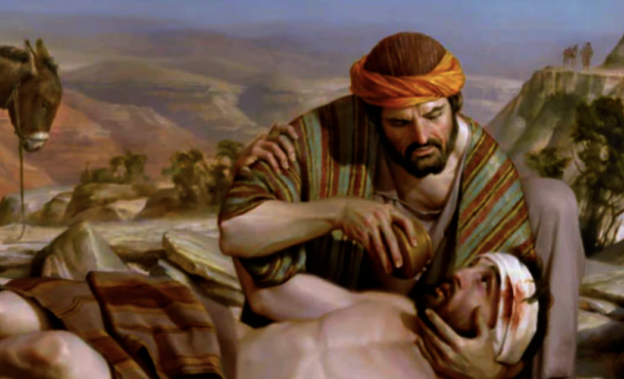
Are you ready in your mind to act instantly to do the right thing should you be called upon to help out in an emergency?
It seemed like a normal enough start to a Monday morning for Constable Lane Douglas-Hunt of the Victoria police department as she walked out of a downtown convenience store where she had investigated a complaint about a stolen candy bar. But life can turn in an instant. Suddenly a mentally unstable man with a taste for violence and a large filet knife launched a vicious, unprovoked attack on the young rookie constable, stabbing her in the neck and then slashing her hands as she attempted to defend herself.
Blair Bates, a local plumber with kickboxing and kung fu training, just happened to be driving by on his way to work. Bates saw the attack, and stood on his breaks pulling over to the curb by the pair now struggling on the sidewalk with the assailant on top slashing away at the severely wounded, weakened police officer. The Canadian Press story quotes the intervening plumber as saying,
“It was just an instant, primal, instinctual reaction, and there was no thought, it was just do… There was no adrenaline, no nothing. I just thought, ‘I have to address this….’ I knew that if I didn’t (help) that she was a goner.
“Within split seconds, he threw all 200 lbs. of his wide-framed body on the attacker, knocking him off the woman as the pair rolled on the ground. He could see she was bleeding profusely from her hands and appeared to be in shock. He dug his knee into the man’s back, slugged his ears several times, and subdued him by saying ‘Buddy, just give me an excuse to kill you.’ The trembling officer flung out her handcuffs and with the help of two more people they restrained him.
“Sgt. Grant Hamilton, spokesman for the Victoria Police, said it was the Good Samaritans’ choice to put themselves in danger. ‘Obviously in this situation we’re very glad they did,’ he said. ‘It’s the right thing to do.’” http://home.mytelus.com/telusen/portal/NewsChannel.aspx?CatID=National&ArticleID=news/capfeed/national/VD721.xml
In a world when so many just don’t want to get involved, or get out of their comfort zone should someone need their help, the Scriptures have something to say to each of us about our personal accountability when we see others in trouble.
Don’t give up and be helpless in times of trouble.
Don’t fail to rescue those who are doomed to die.
Don’t say, “I didn’t know it!”
God can read your mind.
He watches each of us and knows our thoughts.
And God will pay us back for what we do (Proverbs 24:10-12, Contemporary English Version).
Helping others doesn’t always require the years of martial arts training or the sheer guts that Blair Bates was able to call upon to help Const. Douglas-Hunt in her time of need. All that you need is a heart willing to love your neighbour as yourself.
A few weeks ago I was driving home in Nanaimo with my 13-year-old son when I heard a loud pop. Suddenly, smoke started billowing out obscuring my vision. Quickly pulling over to the curb, I popped the hood only to see the engine engulfed in flames and clouds of dark, foul-smelling smoke. Not having anything more useful in that old car, I got a bit of carpet out of the trunk and tried to beat down the flames while I sent my son running to knock on the neighbours’ doors to see if someone had a fire extinguisher. Fortunately someone was ready and willing to help and I was able to put out the fire and save the car plus a week’s groceries.
The godly principle is that we are to be our brother and sister’s keeper. God himself promises to pay us back for whatever good we do for others. Now that’s a truly win-win proposition. If we taught this truth a little more vigorously in our society, our communities would soon become much better places in which to live. Hats off to our Good Samaritans!
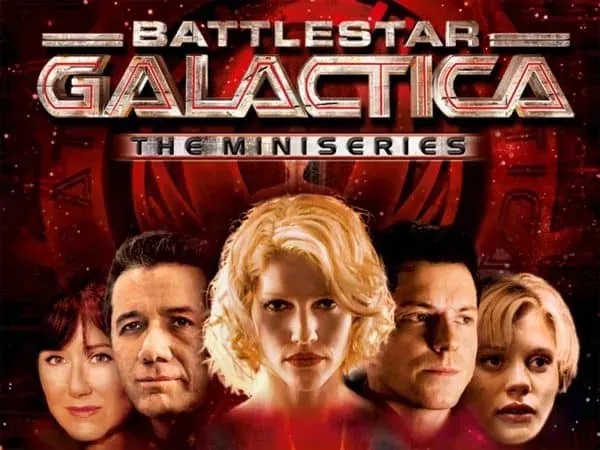
Our nations are lost in moral, spiritual and economic decay. But this situation should not be unexpected. Even our entertainment sheds light on this fact, as it was said multiple times in Battle Star Galactica,
“all of this has happened before, and it will happen again”
The science fiction series was recycling this age-old wisdom from the scriptures,
Solomon put it succinctly, “…there is nothing new under the sun
This saying rings true to our modern age as we, the western civilizations of the US, Canada, Britain, Australia and elsewhere have forsaken our basis in the one true God. We hve traded Him for idols of flesh, paper, silicon, steel and carbon . “All of this has happened before, and it will happen again”
The bible has reiterated this message with examples of previous generations making the same mistakes over and over again resulting in ruin. Don’t get me wrong, this is not eternal recurrence where the same people play out the same events over and over in time. Rather history has a tendency to repeat itself when the students of history do not learn the lessons. Who are the students of history you ask? Well, in fact, we all are, but as many know it is possible to be a student and yet not learn the lesson. Hopefully you and I pay attention so that we can pass the test, and not continue to relive the failed scenarios of the past.
Lets take a look at a couple of examples in the Bible of a people who rejected God. Samuel wrote of the events in his day, and it was not a good day for the nation:
And the Lord said to Samuel, “Heed the voice of the people in all that they say to you; for they have not rejected you, but they have rejectedMe, that I should not reign over them…17 Then Samuel called the people together to the Lord at Mizpah, 18 and said to the children of Israel, “Thus says the Lord God of Israel: ‘I brought up Israel out of Egypt, and delivered you from the hand of the Egyptians and from the hand of all kingdoms and from those who oppressed you.’ 19 But you have today rejected your God, who Himself saved you from all your adversities and your tribulations; and you have said to Him, ‘No, set a king over us!’
Jeremiah lamented about the state of the nation and the destruction that would come because the people had forgotten God and followed evil counsel:
Has a nation changed its gods, Which are not gods? But My people have changed their Glory for what does not profit. Be astonished, O heavens, at this, and be horribly afraid; Be very desolate,” says the Lord. “For My people have committed two evils: They have forsaken Me, the fountain of living waters, And hewn themselves cisterns—broken cisterns that can hold no water... Can the Ethiopian change his skin or the leopard its spots? Then may you also do good who are accustomed to do evil. “Therefore I will scatter them like stubble That passes away by the wind of the wilderness. This is your lot, the portion of your measures from Me,” says the Lord, “Because you have forgotten Me, and trusted in falsehood… “Because My people have forgotten Me, They have burned incense to worthless idols. And they have caused themselves to stumble in their ways, From the ancient paths, to walk in pathways and not on a highway, To make their land desolate and a perpetual hissing; Everyone who passes by it will be astonished and shake his head. I will scatter them as with an east wind before the enemy; I will show them the back and not the face In the day of their calamity.”
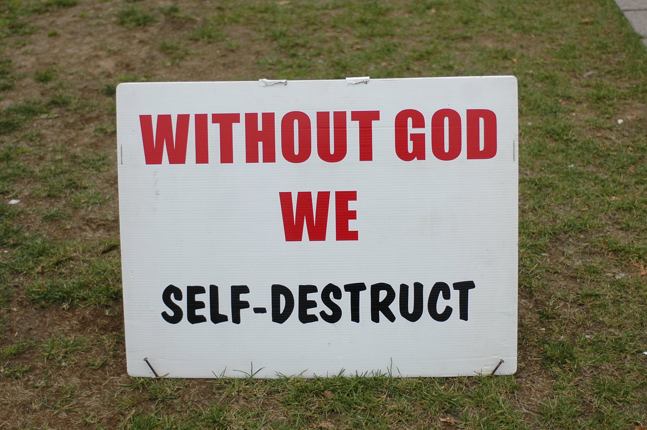
Really, we are no different than those nations and peoples who came before us, for human nature has not changed . The difference in our time is that we have advanced technology. It could be used for good. Or, it will lead us at a fast pace straight down the path to our own self-destruction, if we neglect God and the moral guidelines he has provided.
So it is a paradox that it is possible to be at a point in history right now that is as never before and yet seems to have happened previously. For us it is likely a pivotal point without precedent in recent history with the escalating debts, the lack of moral guidance, increasingly violent and brutal acts committed and sometimes celebrated every day in our media. But on the grander scheme, through the millennia of world history, men and women turning their backs on God, going their own way, and seeking whatever the human heart desires, these things are not new. It is this human nature that is constant that causes similar situations to arise, for the many and varied negative consequences of selfishness, greed, hate, lust and turning away from God and his teachings have all happened many times in the past.
The lesson for the student of history is simple; if we forsake God and go our own way, he will not protect us and we are headed for similar disasters as seen in history unless we turn back to Him. Not a half-hearted turning back with words, but a full-hearted turning to God through our actions, through national repentance, by personally seeking Him and His ways as given in his word. Only when every man woman and child seeks him first will we break the cycle.
It is your personal choice to choose God’s way and receive blessing and life, or to choose your own path filled with no end of troubles, that leads to death. On a personal and national level there is always the opportunity to return to God, change our course, adopt God’s values and be restored and healed.
if My people who are called by My name will humble themselves, and pray and seek My face, and turn from their wicked ways, then I will hear from heaven, and will forgive their sin and heal their land. 2 Chronicles 7:14
Presently we see the once prosperous Western world of 2011 drowning in red ink. Various European Union countries, and the United States of America are wrestling with the financial issues coming from too much sovereign debt and not enough taxes from their populations to pay for it. The news is full of controversy about the right policies to pursue to deal with this potentially catastrophic problem. As The Economist magazine likes to point out,
“for most of human history economic power has been determined by demography” (A Game of Catch-up, 09/20/2011).
Without the slightest bit of doubt, for developed nations like the United States, the European Union, Japan, and even Canada, financial, red ink problems will get much worse in the years immediately ahead as the Post World War II baby-boom generation shifts from paying taxes to the state and instead starts receiving old-age pension cheques from these same governments.
A similar problem, though with some different twists, will also start to hit China at about the same time due to their “4-2-1” social experiment over the last few decades—otherwise known as the one-child policy.
The practical effect of restricting Chinese families to having just one child means that eventually four elderly grandparents and two retirement-age parents will have to rely financially on the support that can be provided by just one child.
The Chinese government is not stupid. They avoided creating a pension black hole–otherwise known as a taxpayer-funded social security scheme—by requiring Chinese families to continue their age old tradition of looking after each other and providing for their own welfare rather than relying on the government. Consequently, strong traditional family structures are the norm in China, having as its basic characteristic the lifelong marital union between a man and a woman.
But the Western developed nations like the United States and Canada have prized individualism—rugged or otherwise—above all traditional family values. Since the 1970s we, too, like the Chinese have engaged in our own profound social experiment, which is sometime referred to as the sexual revolution. In effect the West’s collective historic societal/ moral perspective morphed from the old-fashioned values encapsulated in the motto “In God We Trust” into the post-modern, non-judgmental anthem “Do Your Own Thing” and its corollary “In Our Governments We Trust to Bail Us Out of Our Folly.”
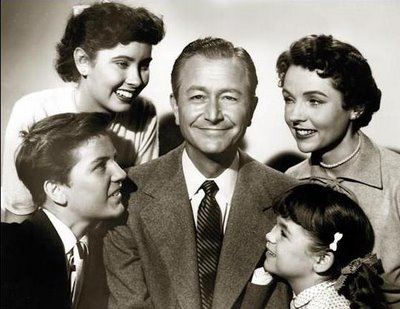
And what has been the end result of the Western World’s social experiment with family morals and social ethics? How about national bankruptcy! Curiously, the Social Trends Institute, a liberal think-tank based in New York and Barcelona, came to the conclusion that the only way to save the Welfare State model with its generous retirement pensions and its multitude of government-funded programs as embraced by the Western developed world is to return to the traditional family structure that has as its base a married mom and dad with their kids. They’re talking about us going retro. You know, like the 1950s-60s American sit-coms “Leave it to Beaver” or “Father Knows Best.”
Entitled “The Sustainable Demographic Dividend,” the Social Trends Institutes makes these poignant observations:
“The wealth of nations is inextricably associated with the health of families… The global retreat from marriage and from family has depressed economic growth and has deeply hurt two generations of children.”
“Evidence drawn from Europe and North America indicates that children who are raised in an intact married home are more likely to excel in school and be active in the labour force as young adults.”
“An abundant social-science literature, as well as common sense, supports the claim that children are more likely to flourish, and to become productive adults, when they are raised in stable, married-couple households.”
“American children who are raised outside an ‘intact married home’ are two to three times more likely to suffer serious social and psychological problems.”
The report then cites the calculations made by Penn State University sociologist Paul Amato that IF America enjoyed a “My Three Sons” level of family stability then:
1. “The nation would have 750,000 fewer children repeating grades.” 2. “1.2 million fewer school suspensions.” 3. “Approximately 500,000 fewer acts of teenage delinquency” 4. About “600,000 fewer kids receiving therapy” 5. Roughly “70,000 fewer suicide attempts every year.”
Next, “The Sustainable Demographic Dividend” mentions the work by four Swedish researchers who discovered that Swedish children living in single parent homes were 50% more likely to be addicted to drugs and alcohol. And they said:
“It is not just the quantity of children that is in decline. It’s the quality of their lives.”
The Western developed world can’t pay its bills because it has been severely reducing the number of its children! The Social Trends Institutes estimates that the developed world is missing at least 60 million children! (All quotes from Neil Reynolds, “Family breakdown is one cause of our economic woes,” The Globe and Mail, Oct. 3. 2011.)
The loss of 60 million lives is probably a low estimate. For the United States alone, from 1970 to 2007 there were 48,106,910 abortions. According to AbortioninCanada.ca there have been about 3 million abortions in Canada since 1969. In just the USA and Canada that makes for 51 million fewer children. Of course, you have to compound that figure to estimate the true loss of human capital since an aborted baby will never have any children of its own.
Just think of it. If just half of the 48 million aborted American babies had lived, then those people should now be in their prime working years. If they would be paying annual social security and other taxes in an average amount of just $3,000 each that would have meant an extra $72 BILLION into the U.S. Treasury. Also, if those aborted children had lived and had generated just an extra $10,000 per year of productivity to the USA economy it would have added an extra $240 BILLION to the gross domestic product. But if that figure was an extra $40,000 per year that would have added almost $1 Trillion of extra economic activity on a yearly basis.
But no, America embraced the “do your own thing” philosophy and devoured over 48 million of its own young because it was just too inconvenient for its immoral parental refusniks.
Do the math. Why are so many of the nations of the Western developed world now staring bankruptcy in the face? Sure budgetary irresponsibility plays a role. But how much of our problem rightly belongs to our stubborn rebellion against our Creator and His moral logic that governs our Universe, including human affairs?
Our whole world’s economic system is wobbling. The potential for its actual collapse is strong. For two generations we have thought we can do our own thing while we turn our collective backs on God’s morals and ethics. We are now beginning to really pay the price. We have destroyed our future economic prosperity through immoral selfishness, lust, and pride. Even a liberal think-tank can see the facts. We would do well to take seriously this warning from one of God’s prophets and change our ways and turn to the knowledge that the Judeo-Christian scriptures teach about what is right and what is wrong as the basis for our social policies while there is yet time.
The LORD has a controversy with the inhabitants of the land. There is no faithfulness or steadfast love, and no knowledge of God in the land; there is swearing, lying, murder, stealing, and committing adultery; they break all bounds, and bloodshed follows bloodshed. Therefore the land mourns and all who dwell in it languish… My people are destroyed for lack of knowledge. Because you have rejected knowledge, I also will reject you from being priest for Me; Because you have forgotten the law of your God, I also will forget your children (Hosea 4:1-3, 6 English Standard Version).
Harm Reduction? Therapeutic Communities — What rally works?
For weeks now my mind has been mulling over one of Canada’s most visible and serious social problems. This is a problem that has just gotten worse despite Municipal, Provincial, and Federal governments throwing BILLIONS of dollars yearly in failing attempts to lessen much less successfully solve this deadly social dysfunction that is spreading throughout Canada’s civic body. The city of Vancouver alone presently spends $360 million annually to deal with it. But the problem just refuses to go away and everybody knows and sees it. So why do our government bureaucracies continue with what is evidently a losing “game”? Why are they so intractable?
The problem, of course, that I’m thinking of tackling for our next documentary is: drug addiction, homelessness, and social marginalization. This is a depressing insidious mix if there ever was one. But in a perverse way this mix of social evils has become a real sustainable growth industry here in Canada. And it has been employing increasing legions of police, social workers, and medical personnel. Why?
How effective can a government program be if it locks down the facility at night so no one can enter or leave, but during the day people can come and go as they please and on “Welfare Wednesday”, when the cheques are passed out, some of the project’s residents head for the streets and the waiting drug dealers? After a few days of totally wasting themselves they stumble back to the project for a place to sleep and food to eat while they wait for the next distribution of money from the government. Government sponsored city-centre harm-reduction programs like this have a very, very low “cure” rate. And even when they bother to keep statistics government finds that only 5 to 15% of such clients ever break free from their addictions.
In contrast to such a faint hope, band-aid type of program there are functioning therapeutic communities. These mostly private programs have “cure” rates in the low to mid 70 percentile, meaning that about 75 of every 100 people who enter such programs get a new life! A key difference between harm reduction programs and therapeutic communities is the will to change. About 2,000 years ago Jesus of Nazareth taught this truth foundational to human change:
“There was a man who had two sons. the younger of them said to his father, ‘Father, give me the share of the property that will belong to me.” So he divided his property between them. A few days later the younger son gathered all he had and traveled to a distant country, and there he squandered his property in dissolute living. When he had spent everything, a severe famine took place throughout that country, and he began to be in need. So he went and hired himself out to one of the citizens of that country, who sent him to his fields to feed the pigs. He would gladly have filled himself with the pods that the pigs were eating; and no one gave him anything. But when he came to himself he said, ‘How many of my father’s hired hands have bread enough and to spare, but here I am dying of hunger! I will get up and go to my father, and I will say to him, “Father, I have sinned against heaven and before you…” (Luke 15:11-18 NRSV).
Jesus’ teaching in the story up to that point was that change could not, and did not occur before the dissolute young man came to himself and found the will, the motivation to turn his life around. Then it was the turn of the caregiver, his father, to extend mercy and to help. To extend mercy without a will to change by the one being helped tends to merely perpetuate a destructive cycle.
It’s not just the addicted who need to change, so must the caregivers. They need to learn to practice tough love, useful kindness, and gentle strength when assisting people with severe problems. The goal should be to help them ‘get a life’ — a purpose and sense of wholeness — rather than merely making them more comfortable while they not-so-slowly kill themselves with their dissolute, destructive habits.
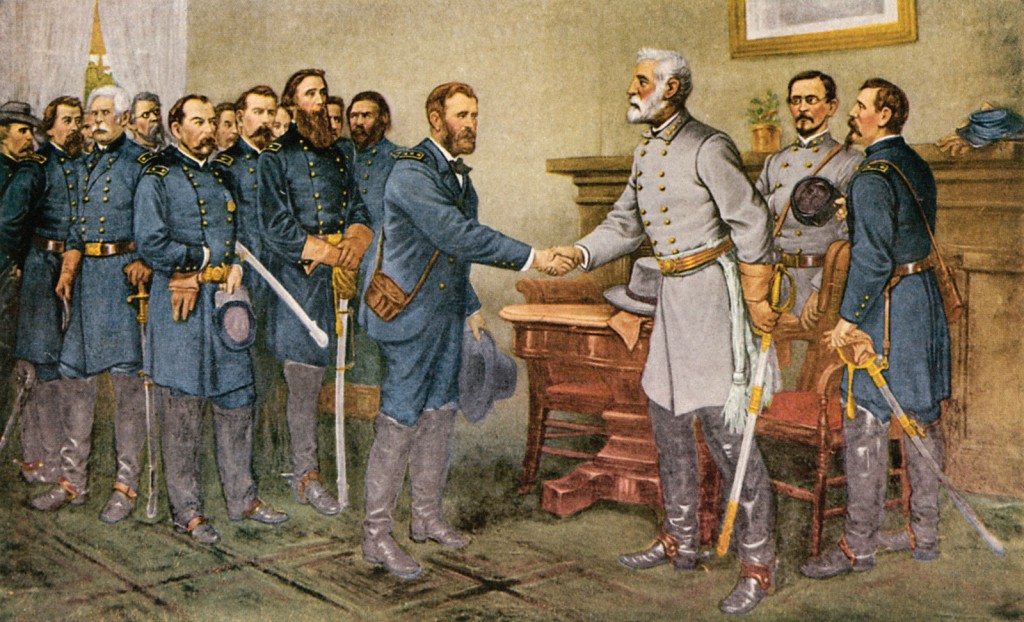
Does honour have a role in our society anymore? Or, is it just a relic of the past that had, perhaps, its last great hurrah at Appomattox with Robert E. Lee and Ulysses S. Grant along with all those Red Badge of Courage soldiers of the American Civil War?
For many in our modern society the whole concept of honour seems to be antiquated, quaint, or maybe even dangerous. Certainly, some today talk up their own “honour” as ugly window-dressing to excuse their own bad and or even evil behaviour. As poet Ralph Waldo Emerson wrote of one such hypocrite: “The louder he talked of his honour, the faster we counted our spoons.”
Are we losing our sense of honour? Over 2,100 years ago, an emancipated Syrian slave named Publilius Syrus, who was publicly recognized by Julius Caesar for his quick wit and wisdom, asked, “What is left when honour is lost?” The answer, of course, is… not much and not for long.
Think about this. For the last 30-40 years the Western liberal democracies have supported corrupt autocratic despots throughout North Africa and the Middle East despite the fact the all these nations’ governing elites actively were suppressing with force or buying off with bribery their own populations. Western governments sold out their political ideals in favour of realpolitik and compromise in order to continue accessing cheap oil.
The European and North American governments were willing to tolerate for a time Muammar Qaddafi — a serial mass murderer proven to be responsible for the deaths of hundreds of their own citizens not to count the thousands of Libyans who perished at his orders. Our Western governments were willing to hold their noses to continue accessing Libya’s “sweet crude” at cheap prices. Crude indeed! Where was honour? It had vanished in the West.
When conservative media personality Glenn Beck held his ‘Restoring Honour’ rally on America’s National Mall in Washington, D.C., a crowd of about 100,000 attended. Enormously controversial, perspectives on Beck and his rally diverged sharply according to the typical American left-right political divide.
Fox News host Bill O’Reilly described it as an “appeal for a return to Judeo-Christian values” and called it “a huge victory for Glenn Beck and Americans who believe that his message of honour and dignity is worthwhile.” Conversely, liberal radio host Bill Press, who attended the rally personally, criticized the “Christian religious fervor” of the event, remarking that at one point he expected Beck “to part the Reflecting Pool and walk across it.” Eugene Robinson of The Washington Post described Beck as an “egomaniacal talk-show host who profit(s) handsomely from stoking fear, resentment and anger”, while calling his “absurdly titled” rally “an exercise in self-aggrandizement on a Napoleonic scale.http://en.wikipedia.org/wiki/Restoring_Honor_rally”
It is amazing how the subject of honour, or teaching honour, or rebuilding standards of honour should be such a divisive, hot-button issue. Nevertheless it is! And the reason for this controversy over restoring honour is because the old, once agreed upon moral and ethical standards that once underpinned the concept of honour in our civilization have also vanished.
Brigham Young University, a private Mormon university in Provo, Utah, created quite a stir in the collegiate sports world—or maybe, astonishment is the better word—when it disqualified Brandon Davies from BYU’s highly ranked basketball team just prior to the NCAA championship tournament. Now for the uninitiated sportsphobe, Brandon Davies was not just your average hoopster. He is, or rather was, the BYU b-ball team’s superstar. Some say that it was his talent on the court that had made BYU a NCAA trophy contender. But whatever Brandon Davies basketball ability, it made no difference to the BYU administrators concerned with upholding the honour of their institution. Davies ran afoul of BYU’s Honour Code by having pre-marital sex with his girlfriend and that got him cut from the eligibility list. The BYU Honour Code cuts no special deals for “privileged personalities.” It states rather simply:
Be honest Live a chaste and virtuous life Obey the law and all campus policies Use clean language Respect others Abstain from alcoholic beverages, tobacco, tea, coffee, and substance abuse Participate regularly in church services Observe the Dress and Grooming Standards Encourage others in their commitment to comply with the Honor Code http://saas.byu.edu/catalog/2010-2011ucat/GeneralInfo/HonorCode.php#HCOfficeInvovement
Let’s be frank. With the exemption of Brigham Young’s Mormon idiosyncrasies regarding “alcoholic beverages… tea, coffee,” the rest of the BYU Honor Code is soundly based on the Judeo-Christian scriptures that have been the primary moral foundation for much of the Western world’s sense of personal honour for some 2,000 years. But in the “progressive” world of university amateur sports, such a code of honourable conduct no longer exists — or, perhaps it is more accurate to say, it is no longer really enforced even if those educational and sports institutions still have it on the books. To them even the mere idea of an honor code is laughable! Why?
Well, winning university sports programs equal big money: tens of millions of dollars from broadcast license fees, ticket sales, swag sales, corporate sponsorship and alumni donations. Winning is the only thing that counts to those institutions of lower learning. The profitable ends are seen as justifying the corrupt means. This is just like Western governments tolerating oppression and the spilled blood of innocents so they can keep the cheap “sweet crude” flowing. They’re immorally equivalent. Joe O’Connor, a reporter with National Post newspaper, observed:
College sports in the United States are awash with scurrilous dealings and out-and-out skullduggery. Schools with long and glorious winning traditions and boosters with money to burn will often resort to, well, just about anything to entice a superstar high school athlete to play for them and, once they are enrolled, do almost anything they can to keep them happy. Need some new clothes? Done. Spending money? No problem. A car? Take mine. Free gas? Fill ’er up. Having trouble in school? We’ll write the test. Homesick? How about a prostitute? Yes. A prostitute. College athletes, the best of the best, are treated like gods. Naughty gods, while college coaches and athletic administrators are the great corrupters. http://sports.nationalpost.com/2011/03/05/student-of-morals-byu-star-dropped-for-premarital-sex/
As the acerbic satirist H.L Mencken once wrote, “The difference between a [im]moral man and a man of honor is that the latter regrets a discreditable act, even when it has worked and he has not been caught.” (Prejudices: Fourth Series,’ 1924). Pardon my brackets of scribal emendation.
Today, while many American lefties discount the idea of having a rally to promote the idea of “restoring honour,” it should be noted that honour is the main reason the United States of America survived and prospered to become the most powerful nation in the world after its Civil War of some 150 years ago. How so?
On April 9, 1865, Robert E. Lee, commanding general of the Army of Northern Virginia, was staring defeat in the eye. The southern Confederate States of America were in deep trouble after four years of warfare with the much richer and materially stronger northern United States of America. Surrounded on three sides by his foes, Lee knew that the history books are almost always written by a war’s victors. Typically in a civil war/rebellion situation, the victors get the spoils while the losers get it in the neck.
If Robert E. Lee were to surrender to the opposing Union general, Ulysses S. Grant, he had no idea what his fate or that of his men would be. Humiliation? Prisoner of war camp? Execution as criminals? Neither Lee nor his men were afraid to die. They had already proven that countless times during the previous four years. But dishonour was something else. What should he do? Lee’s alternative to surrendering his army as a single unit was to allow his army to disband into small units and melt into the forested hills adjacent to his position and to carry on the Confederate struggle by guerrilla warfare.
The odds were that the South might actually beat the North in a protracted, vicious guerrilla conflict, just like the Spanish and Russians beat Napoleon or like, a century later the North Vietnamese and Chinese beat the Americans in Southeast Asia. In fact, historically, Abraham Lincoln and his Union generals’ greatest fear was that the weaker southern Confederacy would opt for guerrilla warfare in order to even the odds with the strong northern Union. They would bleed them white through low intensity conflict and countless small attacks and ambushes. As University of Maryland historian and Wall Street Journal contributor Jay Winik writes:
Total conquest could be resisted, until, perhaps, attrition and exhaustion would lead the North to sue the South for peace…. [Lee] listened to one of his most trusted advisers in the cool early morning hours of April 9…he was doing some quick calculations in his head about the effect that generations of bushwhacking—guerrilla warfare—would have on the country…. What was honorable? What was proper? What is right? He quickly reasoned that a guerrilla war would make a wasteland of all that he loved. Brother would be set against brother, not just for four years, but for generations. Such a war would surely destroy Virginia [and the South], and just as surely destroy the [northern United States] as well.
As [Lee] had once said, ‘It [is] better to do right, even if we suffer in so doing, than to incur the reproach of our consciences & posterity.” Thus, Robert E. Lee, so revered for his leadership in war, made his most historic contribution to peace. By this one momentous decision, he spared the country the divisive guerrilla warfare that surely would have followed, a vile and poisonous conflict” (April 1865, The month that saved America, HarperCollins, 2001, pp. 164-154.)
So, how do we in the 21st Century re-build a sense of honour amongst our peoples in the West? Perhaps surprisingly to some, Jesus of Nazareth pointed the way during his sermon on the mount when he said:
Trivialize even the smallest item in God’s Law and you will only have trivialized yourself. But take it seriously, show the way for others, and you will find honour in the kingdom. Unless you do far better than the Pharisees in the matters of right living, you won’t know the first thing about entering the kingdom [of eternal life and light] (Matthew 5:19-20 The Message paraphrase).
This is a remarkable teaching by the Son of Man linking moral thought and godly behaviour to honour. The Ten Commandments, in effect, make for a very effective code of honour. It is short in form and fairly easy to commit to memory. However, its profound, succinct principles have stood the test of time in providing the basis for serious reflection on and guidance in most of the dilemmas and questions that come our way in this life. Blow the dust of your Bible and check them out in either Exodus 20 or Deuteronomy 5.
As King David of ancient Israel would sing under the stars,
1 LORD, who may abide in Your tabernacle? Who may dwell in Your holy hill? 2 He who walks uprightly, And works righteousness, And speaks the truth in his heart; 3 He who does not backbite with his tongue, Nor does evil to his neighbor, Nor does he take up a reproach against his friend; 4 In whose eyes a vile person is despised, But he honors those who fear the LORD; He who swears to his own hurt and does not change; 5 He who does not put out his money at usury, Nor does he take a bribe against the innocent. He who does these things shall never be moved. Psalm 15
Just think what a different world this would be if we actually embraced and lived by such a code of honour.
When my youngest son wants to do something I’m not too excited about, we’ll talk together and come up with a compromise solution in which each of us gives a little so that the household can continue on in harmony.
Compromise is a normal part of the give and take of any family or human relationship. We adapt our personal preferences and opinions for the greater good of getting along with another. That’s normal.
But when it comes to the moral logic of the Universe and the demonstrable truth of the Judeo-Christian scriptures about what is right and what is wrong, it has always been required of Christians in every epoch of history to draw a line in the sand over something with which they cannot compromise. To accept the sinful cultural practices of their time or civilization would have been anathema.
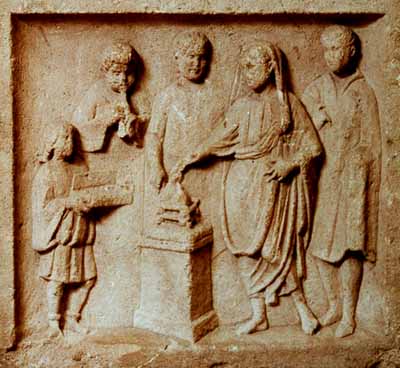
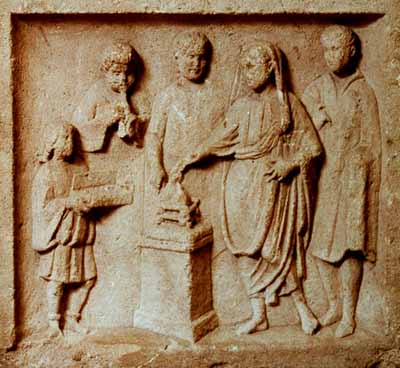
For first century A.D. Christians it was not offering a pinch of incense on the Roman altar of state in order to acknowledge that Caesar was supreme: a small act of Roman paganism that clearly violated the Bible’s first commandment:
Then God gave the people all these instructions: “I am the Lord your God, who rescued you from the land of Egypt, the place of your slavery. You must not have any other god but me” (Exodus 20:1-3 NLT).
Many thousands of Christians were hideously murdered by the barbaric Roman state for refusing to compromise with the “most noble Caesar, the civilized world’s benefactor” and just offer that little act of worship.
For post-modern Christians living in the 21st Century, there is now a tremendous pressure to conform to what may be labelled “politically correct paganism,” which like all the pagan ideologies of the past, essentially worships and exalts human ideas of right and wrong above the divine ones taught by the Hebrew and Greek scriptures.
In the latest edition of a sorry series of similar events, a biblical-values sensitive, conservative Anglican congregation was forced out of its long-held church property—St. Albans Anglican Church on King George Street—where they had been meeting since before Canadian Confederation in 1867 — by the “politically correct” Anglican Diocese of Ottawa. Their issue was same sex marriage within their church congregation.
The pastor of this forced-to-leave congregation, George Sinclair, said:
The move was “an issue of conscience, and for us, conscience trumps building … A church that just has the building, but does not have the dreams and visions that come from God, is on its way to dying … If you end up thinking you’re smarter and nicer and wiser than the master [Jesus Christ], in what way are you still his disciple? … The Bible is very clear on certain things, as to what is right or wrong.” http://www.ottawacitizen.com/life/Anglican+Church+followers+find+home/5008958/story.html#ixzz1QcGf00LT
These conservative Anglicans came to understand that when it comes to sin—compromise is indeed the language of the devil.
Sin? What is sin? Why can’t one compromise with sin?
The Apostle John gave a succinct defintion of just what sin is:
“Everyone who commits sin is guilty of lawlessness; sin is lawlessness” (1 John 3:4 NRSV).
The law that the apostle was referring to is God’s law as contained in the Hebrew and Greek bibles—not Canada’s federal and provincial law, not even the rules and policies of the Anglican Diocese of Ottawa.
God’s law divides behaviour and thought patterns into those that are permitted, generally called “righteousness” and those that are forbidden, which is “sin.”
Spiritually speaking, there are serious consequences for those who deliberately chose to live sin-full lifestyles. As the Apostle Paul wrote:
For the wages of sin is death, but the free gift of God is eternal life through Christ Jesus our Lord (Romans 6:23 NLT).
The reason no one can compromise with sin and get away with it in the long run is because…well, without God we’re just dead meat. The Bible does NOT say you have an immortal soul! The scriptures clearly teach that eternal life is only for those who belong to Christ and who are resurrected from among the dead (cf. 1 Corinthians 15:23).
The whole purpose of Jesus first coming and His sacrifice was to rescue His people from the consequences of sin. We cannot cuddle up to or give ourselves permission to do what the Scriptures say is wrong and not pay the price! Again, listen to this warning from the Apostle John:
Dear children, don’t let anyone deceive you about this: When people do what is right, it shows that they are righteous, even as Christ is righteous. 8 But when people keep on sinning, it shows that they belong to the devil, who has been sinning since the beginning. But the Son of God came to destroy the works of the devil (1 John 3:7-8 NLT).
Leading Unleavened Lives Unleavened Bread — A Quaint Tradition?
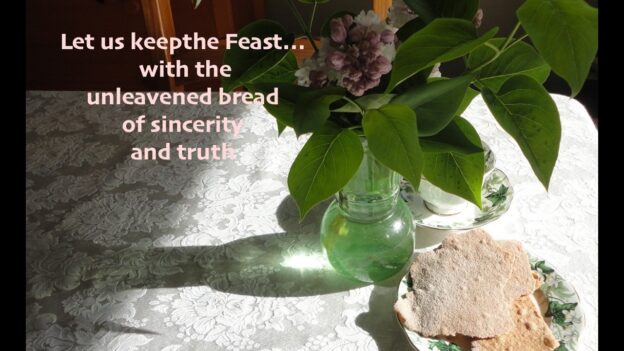
If we know the biblical accounts, then we know this is a time when our spiritual ancestors would have been leading unleavened lives. For they had physically removed the yeast of leavened bread from their homes. But, the Christian world is divided when it comes to how to celebrate or remember the events that the bible recounts at this time of year. Most conventional Christians embrace the Good Friday – Easter Sunday tradition. If they think about it at all, they may consider Passover, and the idea of eating ‘unleavened bread,’ matzah, as quaint Jewish customs. But in favouring tradition over ‘sola scriptura’ believers are missing important lessons that we are told to remember. So how did our spiritual ancestors worship and what insight did this give them?
Unleavened Bread — Our Spiritual Heritage
Paul in writing to the Corinthians reminded them of their spiritual heritage. He had instructed them to ‘put out the leaven’ in accordance with the Lord God’s instructions in the book of Exodus. For even though Gentiles by birth, they had become part of God’s people by baptism. But there was a problem. They had removed the physical leaven from their homes. But, they were not leading unleavened lives. They were ‘leavened’ by tolerating sexual sin in their midst. And Paul knew, that like leaven, a little spiritual corruption could become pervasive. And in time that leaven of sin could destroy the whole congregation. Paul’s advice was to remove the leaven of malice and vice, by leading unleavened lives in sincerity and untainted truth.
The Problem with Leaven
Jesus warned his disciples of the danger of ‘spiritual leaven’ and following the hypocritical example of the Pharisees. The religious leaders of the time may have appeared pious. But, Jesus decried them as ‘blind guides’ who would lead people astray. How would they do this? The Pharisees were adept religious showmen who made a point of keeping the law to look good. And many people were taken-in by their showmanship. But Jesus’ confronted them, calling them ‘play actors,’ whose outward show concealed a spirit of murder, and a jealous self-indulgent heart. For in reality they were lawless and hostile to God and his laws, specifically the principles of justice, mercy, and faith. Jesus counselled them to be clean from the inside out. And not merely whitewashed tombs that looked good on the outside, but were spiritually dead inside.
Paul’s Teaching to the Gentile Christians
Both Paul and Peter reminded Christians that they were God’s temple, a place for his spirit to dwell. So they needed to be pure from the inside out. Eating unleavened bread at Passover, was symbolic of leading unleavened lives. This was to be accomplished through God’s spirit of love. So that as obedient children, they would be faithful workers, pure and virtuous. Having been redeemed from death by Christ’s sacrifice, Christians would embrace a new way of life free from deceit, hypocrisy, and jealousy. This was going to be a life-long mission, to put on the mind of Christ who led a sinless, unleavened life. And there would be obstacles to overcome.
Hypocrisy and the Leaven of Balaam’s Way
John’s book of Revelation highlighted one of the pitfalls that would challenge believers’ sincerity in leading unleavened lives. Jesus sent a Message to Pergamos, that ancient religious centre with temples devoted to the worship of Zeus, Dionysius, and Caesar. Jesus “knew where they dwelt,” for the believers lived in the midst of a world of religious confusion. His concern was that the believers were being negatively influenced by the teaching of Balaam. Balaam’s philosophy was a ‘do your own thing’ style of worship, that was indulgent and offered ‘freedom’ from the law of God. Of course, Jesus’ prophetic message rings true today. For there are many religious teachers who preach a message of love and a distorted grace. This message, like Balaam’s, encourages people to ignore or reject God’s instructions in favour of personal freedom of religious expression.
Jude adds to John’s observations, noting that those who follow Balaam’s way, are caught up in sensuality, and despise outside authorities. They have become their own authority on what is acceptable behaviour. They are no longer leading unleavened lives according to the scriptures, but are caught up in their own emotional and philosophical religious ideas. Balaam’s story is recounted in the Book of Numbers.
Balaam did not want to provoke God directly by prophesying against Israel, as God had forbidden him to do so. Yet, Balaam really wanted the rich reward offered by Balak the King who wanted Israel destroyed. Balaam put his self-interest above God’s interests. So in his insolence and self-will Balaam looked for an angle — a way he could circumvent God’s direct command. He was okay with keeping the “letter” of the law while violating the spirit of the law, motivated by his greed and lust for wealth and status.
Avoiding the Pitfalls of Self-Indulgence
Balaam wanted his own sweet way! So he found a way around God’s command, by counselling Balak to incite Israel to commit sin. He encouraged Balak to send women into the camp of Israel to entice the men into sexual sin and worship of their god, Baal-peor. As a result, the people of Israel reaped what was sown by their sexual indulgence and were punished for their disobedience. Christians can get caught up in conniving deceitful behaviour like Balaam. And they can cause others to stumble by inciting them to be unfaithful and disobedient.
Or, they can be like the ancient Israelites, naively believing Balaam’s message. Assuming erroneously that it is okay to disobey God, and there will be no consequences for spiritual leaven in their lives. Scriptures tell us to think carefully about the story of Balaam. We should consider whether we are like Balaam, and the Israelites who disobeyed God. Or are we like Phinehas who had a passion for God’s ways and stood up against the tide of lawlessness and sensuality?
Chosen to Lead Unleavened Lives
Passover and unleavened bread remind us to root lawless behaviour out of our lives. For we are God’s chosen people, chosen to be holy — leading unleavened lives. We need to be aware of Balaam’s tricks, and the negative impact of focusing on the things that the world values. Having been called into God’s light, and leading unleavened lives, we can show others the goodness of God. This is a key lesson of the Passover season and now is a good time for some self-reflection. There are great benefits, rewards we can reap, in our own lives and the lives of family and friends, if we commit to leading unleavened lives all year long.
Christ’s birth was a miraculous and foundational element of Christian belief. This historic event is not accurately portrayed among most traditional churches, as it most certainly did not happen December 25th. And typically, the story and import of Christ’s birth is obscured by useless traditions and its association with pagan winter festivals. So what really happened? And why is it important for people to understand the message that Christ’s birth conveys? The bible has stories that you may not know and answers that might surprise you.
In one sense the story of Christ’s birth begins in the book of Isaiah, during the reign of Ahaz. The prophet had told Ahaz to ask a sign from God. Ahaz was facing an implacable foe and fearful of defeat, and yet he refused to ask for a sign. The prophet then gave the prophecy of the Messiah, as a sign of the immediate deliverance of the nation from the Assyrian invaders. But it also promised a future fulfillment and greater deliverance. For a virgin would conceive and bear a child and he would be ‘Immanuel’ – God with us.
For unto us a Child is born, Unto us a Son is given; And the government will be upon His shoulder. And His name will be called Wonderful, Counselor, Mighty God, Everlasting Father, Prince of Peace. 7 Of the increase of His government and peace There will be no end, Upon the throne of David and over His kingdom, To order it and establish it with judgment and justice From that time forward, even forever. The zeal of the Lord of hosts will perform this. Isaiah 9
Isaiah’s Prophecy Fulfilled – Partially
This prophecy began to be fulfilled in the time of the gospel writers. Luke wrote about the angel who appeared to Zacharias promising the childless couple that they would have a son. This son, John, would be a Nazarite devoted to God’s service and filled with God’s spirit. He would prepare the way for the coming of the Messiah. And, like Elijah, he would turn the hearts of the people back to serve the Lord God, rejecting the idolatry of the contemporary society. Zacharias had a hard time believing what he had heard and experienced. But soon, as promised, his wife, Elizabeth, became pregnant. It seemed to this elderly couple that anything was possible when God was involved, for there was nothing too hard for God.
Shortly thereafter, the angel appeared to Elizabeth’s cousin, Mary, who was betrothed to Joseph. Mary was surprised when she was told that it was through her that the prophecy of Isaiah would be fulfilled. She, though a virgin, would conceive a son who would be ‘Immanuel’ – God with us. He would be named “Jesus/Yeshua” which means God is salvation. Mary did not doubt what the angel said, though she wondered how it would all take place. She understood that nothing was too hard for God. Even Joseph, when told the circumstances surrounding Mary’s pregnancy in a dream, believed in God’s ability to perform a miracle as he had promised.
Jeremiah and the Message of Messiah
In Judea, based on the prophecies of the Hebrew scriptures, many people were anticipating the coming of the Messiah. They looked for the coming of a warrior king to save them from Roman domination. The people remembered Jeremiah’s prophecy of the return of Judah to the land of promise. They had seen these prophecies fulfilled when their forefathers were released from exile in Babylon and their land was restored to them. So they believed that there was nothing too hard for God.
The begettal and birth of the Messiah, Jesus, as the son of God was the fulfillment of prophecy. But, he was also the forerunner, being the first of many brothers and sisters, to be begotten of the Father. His coming gives every Christian hope for the future, as co-inheritors of the great promises of eternal life in the family of God. Just as Jeremiah obtained a title deed in hope of a future inheritance in the land of Israel, so the spirit of Christ in us is our “title deed” to a place in the spiritual promised land. But there is more. Jesus’ birth also gives hope to all of humanity, everyone who has suffered under the tyranny of human rule. For his birth opened up the possibility of the restoration of all things.
Daniel and the Son of Man
Daniel’s prophecy of the Son of Man and the Ancient of days provided a historical context for the second coming of the Messiah. There would be a time of restoration after the rise and fall of the great empires of the world: Babylon, Persia, Greece, and Rome. The Ancient of Days would send the Son of Man, the Messiah, to destroy human civilizations. And in their place the Messiah and the saints of God would establish the Kingdom of God. This Kingdom, made possible by the birth and death and return of the Messiah, the Christ, will remain forever.
So when we consider the good news of Christ’s birth it has profound implications for humanity. There is nothing too hard for the Lord God. For when he returns, he will establish justice and the end result will be peace – something our world needs desperately.
Learn more about the Messiah from Handel’s Oratorio: