Are you ready in your mind to act instantly to do the right thing should you be called upon to help out in an emergency?
It seemed like a normal enough start to a Monday morning for Constable Lane Douglas-Hunt of the Victoria police department as she walked out of a downtown convenience store where she had investigated a complaint about a stolen candy bar. But life can turn in an instant. Suddenly a mentally unstable man with a taste for violence and a large filet knife launched a vicious, unprovoked attack on the young rookie constable, stabbing her in the neck and then slashing her hands as she attempted to defend herself.
Blair Bates, a local plumber with kickboxing and kung fu training, just happened to be driving by on his way to work. Bates saw the attack, and stood on his breaks pulling over to the curb by the pair now struggling on the sidewalk with the assailant on top slashing away at the severely wounded, weakened police officer. The Canadian Press story quotes the intervening plumber as saying,
“It was just an instant, primal, instinctual reaction, and there was no thought, it was just do… There was no adrenaline, no nothing. I just thought, ‘I have to address this….’ I knew that if I didn’t (help) that she was a goner.
“Within split seconds, he threw all 200 lbs. of his wide-framed body on the attacker, knocking him off the woman as the pair rolled on the ground. He could see she was bleeding profusely from her hands and appeared to be in shock. He dug his knee into the man’s back, slugged his ears several times, and subdued him by saying ‘Buddy, just give me an excuse to kill you.’ The trembling officer flung out her handcuffs and with the help of two more people they restrained him.
“Sgt. Grant Hamilton, spokesman for the Victoria Police, said it was the Good Samaritans’ choice to put themselves in danger. ‘Obviously in this situation we’re very glad they did,’ he said. ‘It’s the right thing to do.’” http://home.mytelus.com/telusen/portal/NewsChannel.aspx?CatID=National&ArticleID=news/capfeed/national/VD721.xml
In a world when so many just don’t want to get involved, or get out of their comfort zone should someone need their help, the Scriptures have something to say to each of us about our personal accountability when we see others in trouble.
Don’t give up and be helpless in times of trouble.
Don’t fail to rescue those who are doomed to die.
Don’t say, “I didn’t know it!”
God can read your mind.
He watches each of us and knows our thoughts.
And God will pay us back for what we do (Proverbs 24:10-12, Contemporary English Version).
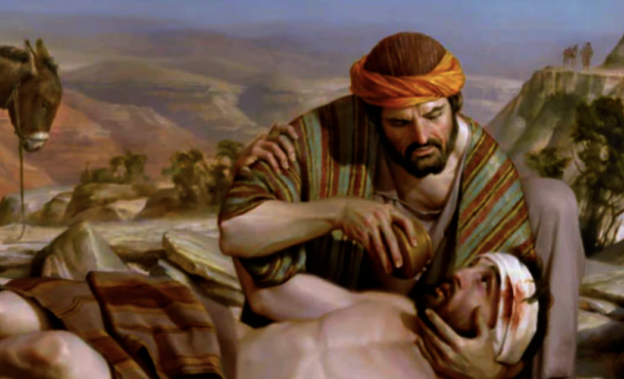
Helping others doesn’t always require the years of martial arts training or the sheer guts that Blair Bates was able to call upon to help Const. Douglas-Hunt in her time of need. All that you need is a heart willing to love your neighbour as yourself.
A few weeks ago I was driving home in Nanaimo with my 13-year-old son when I heard a loud pop. Suddenly, smoke started billowing out obscuring my vision. Quickly pulling over to the curb, I popped the hood only to see the engine engulfed in flames and clouds of dark, foul-smelling smoke. Not having anything more useful in that old car, I got a bit of carpet out of the trunk and tried to beat down the flames while I sent my son running to knock on the neighbours’ doors to see if someone had a fire extinguisher. Fortunately someone was ready and willing to help and I was able to put out the fire and save the car plus a week’s groceries.
The godly principle is that we are to be our brother and sister’s keeper. God himself promises to pay us back for whatever good we do for others. Now that’s a truly win-win proposition. If we taught this truth a little more vigorously in our society, our communities would soon become much better places in which to live. Hats off to our Good Samaritans!
Presently we see the once prosperous Western world of 2011 drowning in red ink. Various European Union countries, and the United States of America are wrestling with the financial issues coming from too much sovereign debt and not enough taxes from their populations to pay for it. The news is full of controversy about the right policies to pursue to deal with this potentially catastrophic problem. As The Economist magazine likes to point out,
“for most of human history economic power has been determined by demography” (A Game of Catch-up, 09/20/2011).
Without the slightest bit of doubt, for developed nations like the United States, the European Union, Japan, and even Canada, financial, red ink problems will get much worse in the years immediately ahead as the Post World War II baby-boom generation shifts from paying taxes to the state and instead starts receiving old-age pension cheques from these same governments.
A similar problem, though with some different twists, will also start to hit China at about the same time due to their “4-2-1” social experiment over the last few decades—otherwise known as the one-child policy.
The practical effect of restricting Chinese families to having just one child means that eventually four elderly grandparents and two retirement-age parents will have to rely financially on the support that can be provided by just one child.
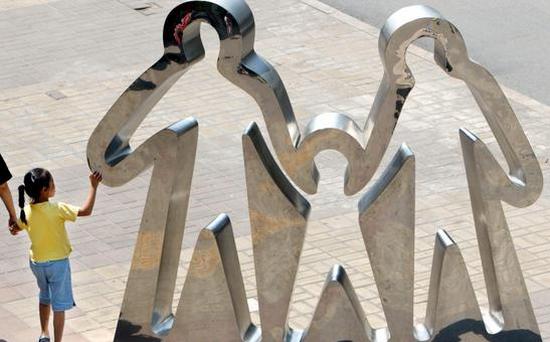
The Chinese government is not stupid. They avoided creating a pension black hole–otherwise known as a taxpayer-funded social security scheme—by requiring Chinese families to continue their age old tradition of looking after each other and providing for their own welfare rather than relying on the government. Consequently, strong traditional family structures are the norm in China, having as its basic characteristic the lifelong marital union between a man and a woman.
But the Western developed nations like the United States and Canada have prized individualism—rugged or otherwise—above all traditional family values. Since the 1970s we, too, like the Chinese have engaged in our own profound social experiment, which is sometime referred to as the sexual revolution. In effect the West’s collective historic societal/ moral perspective morphed from the old-fashioned values encapsulated in the motto “In God We Trust” into the post-modern, non-judgmental anthem “Do Your Own Thing” and its corollary “In Our Governments We Trust to Bail Us Out of Our Folly.”
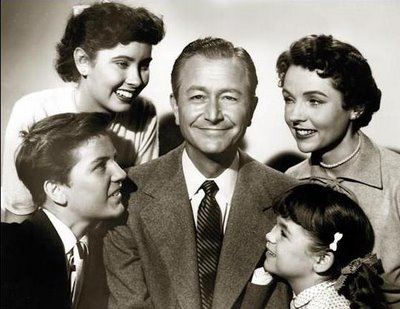
And what has been the end result of the Western World’s social experiment with family morals and social ethics? How about national bankruptcy! Curiously, the Social Trends Institute, a liberal think-tank based in New York and Barcelona, came to the conclusion that the only way to save the Welfare State model with its generous retirement pensions and its multitude of government-funded programs as embraced by the Western developed world is to return to the traditional family structure that has as its base a married mom and dad with their kids. They’re talking about us going retro. You know, like the 1950s-60s American sit-coms “Leave it to Beaver” or “Father Knows Best.”
Entitled “The Sustainable Demographic Dividend,” the Social Trends Institutes makes these poignant observations:
“The wealth of nations is inextricably associated with the health of families… The global retreat from marriage and from family has depressed economic growth and has deeply hurt two generations of children.”
“Evidence drawn from Europe and North America indicates that children who are raised in an intact married home are more likely to excel in school and be active in the labour force as young adults.”
“An abundant social-science literature, as well as common sense, supports the claim that children are more likely to flourish, and to become productive adults, when they are raised in stable, married-couple households.”
“American children who are raised outside an ‘intact married home’ are two to three times more likely to suffer serious social and psychological problems.”
The report then cites the calculations made by Penn State University sociologist Paul Amato that IF America enjoyed a “My Three Sons” level of family stability then:
1. “The nation would have 750,000 fewer children repeating grades.” 2. “1.2 million fewer school suspensions.” 3. “Approximately 500,000 fewer acts of teenage delinquency” 4. About “600,000 fewer kids receiving therapy” 5. Roughly “70,000 fewer suicide attempts every year.”
Next, “The Sustainable Demographic Dividend” mentions the work by four Swedish researchers who discovered that Swedish children living in single parent homes were 50% more likely to be addicted to drugs and alcohol. And they said:
“It is not just the quantity of children that is in decline. It’s the quality of their lives.”
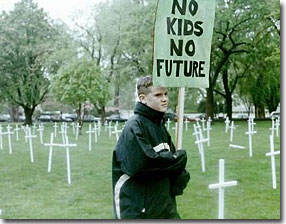
The Western developed world can’t pay its bills because it has been severely reducing the number of its children! The Social Trends Institutes estimates that the developed world is missing at least 60 million children! (All quotes from Neil Reynolds, “Family breakdown is one cause of our economic woes,” The Globe and Mail, Oct. 3. 2011.)
The loss of 60 million lives is probably a low estimate. For the United States alone, from 1970 to 2007 there were 48,106,910 abortions. According to AbortioninCanada.ca there have been about 3 million abortions in Canada since 1969. In just the USA and Canada that makes for 51 million fewer children. Of course, you have to compound that figure to estimate the true loss of human capital since an aborted baby will never have any children of its own.
Just think of it. If just half of the 48 million aborted American babies had lived, then those people should now be in their prime working years. If they would be paying annual social security and other taxes in an average amount of just $3,000 each that would have meant an extra $72 BILLION into the U.S. Treasury. Also, if those aborted children had lived and had generated just an extra $10,000 per year of productivity to the USA economy it would have added an extra $240 BILLION to the gross domestic product. But if that figure was an extra $40,000 per year that would have added almost $1 Trillion of extra economic activity on a yearly basis.
But no, America embraced the “do your own thing” philosophy and devoured over 48 million of its own young because it was just too inconvenient for its immoral parental refusniks.
Do the math. Why are so many of the nations of the Western developed world now staring bankruptcy in the face? Sure budgetary irresponsibility plays a role. But how much of our problem rightly belongs to our stubborn rebellion against our Creator and His moral logic that governs our Universe, including human affairs?
Our whole world’s economic system is wobbling. The potential for its actual collapse is strong. For two generations we have thought we can do our own thing while we turn our collective backs on God’s morals and ethics. We are now beginning to really pay the price. We have destroyed our future economic prosperity through immoral selfishness, lust, and pride. Even a liberal think-tank can see the facts. We would do well to take seriously this warning from one of God’s prophets and change our ways and turn to the knowledge that the Judeo-Christian scriptures teach about what is right and what is wrong as the basis for our social policies while there is yet time.
The LORD has a controversy with the inhabitants of the land. There is no faithfulness or steadfast love, and no knowledge of God in the land; there is swearing, lying, murder, stealing, and committing adultery; they break all bounds, and bloodshed follows bloodshed. Therefore the land mourns and all who dwell in it languish… My people are destroyed for lack of knowledge. Because you have rejected knowledge, I also will reject you from being priest for Me; Because you have forgotten the law of your God, I also will forget your children (Hosea 4:1-3, 6 English Standard Version).
Harm Reduction? Therapeutic Communities — What rally works?
For weeks now my mind has been mulling over one of Canada’s most visible and serious social problems. This is a problem that has just gotten worse despite Municipal, Provincial, and Federal governments throwing BILLIONS of dollars yearly in failing attempts to lessen much less successfully solve this deadly social dysfunction that is spreading throughout Canada’s civic body. The city of Vancouver alone presently spends $360 million annually to deal with it. But the problem just refuses to go away and everybody knows and sees it. So why do our government bureaucracies continue with what is evidently a losing “game”? Why are they so intractable?
The problem, of course, that I’m thinking of tackling for our next documentary is: drug addiction, homelessness, and social marginalization. This is a depressing insidious mix if there ever was one. But in a perverse way this mix of social evils has become a real sustainable growth industry here in Canada. And it has been employing increasing legions of police, social workers, and medical personnel. Why?
How effective can a government program be if it locks down the facility at night so no one can enter or leave, but during the day people can come and go as they please and on “Welfare Wednesday”, when the cheques are passed out, some of the project’s residents head for the streets and the waiting drug dealers? After a few days of totally wasting themselves they stumble back to the project for a place to sleep and food to eat while they wait for the next distribution of money from the government. Government sponsored city-centre harm-reduction programs like this have a very, very low “cure” rate. And even when they bother to keep statistics government finds that only 5 to 15% of such clients ever break free from their addictions.
In contrast to such a faint hope, band-aid type of program there are functioning therapeutic communities. These mostly private programs have “cure” rates in the low to mid 70 percentile, meaning that about 75 of every 100 people who enter such programs get a new life! A key difference between harm reduction programs and therapeutic communities is the will to change. About 2,000 years ago Jesus of Nazareth taught this truth foundational to human change:
“There was a man who had two sons. the younger of them said to his father, ‘Father, give me the share of the property that will belong to me.” So he divided his property between them. A few days later the younger son gathered all he had and traveled to a distant country, and there he squandered his property in dissolute living. When he had spent everything, a severe famine took place throughout that country, and he began to be in need. So he went and hired himself out to one of the citizens of that country, who sent him to his fields to feed the pigs. He would gladly have filled himself with the pods that the pigs were eating; and no one gave him anything. But when he came to himself he said, ‘How many of my father’s hired hands have bread enough and to spare, but here I am dying of hunger! I will get up and go to my father, and I will say to him, “Father, I have sinned against heaven and before you…” (Luke 15:11-18 NRSV).
Jesus’ teaching in the story up to that point was that change could not, and did not occur before the dissolute young man came to himself and found the will, the motivation to turn his life around. Then it was the turn of the caregiver, his father, to extend mercy and to help. To extend mercy without a will to change by the one being helped tends to merely perpetuate a destructive cycle.
It’s not just the addicted who need to change, so must the caregivers. They need to learn to practice tough love, useful kindness, and gentle strength when assisting people with severe problems. The goal should be to help them ‘get a life’ — a purpose and sense of wholeness — rather than merely making them more comfortable while they not-so-slowly kill themselves with their dissolute, destructive habits.
On the one-year anniversary of the world’s worst oil spill in the Gulf of Mexico, I was listening to a CBC Radio 1 interview with Kenneth Fineberg, who is also known as the “pay czar” for British Petroleum’s US$20 billion compensation fund for those hurt by that environmental disaster. Fineberg, a legal specialist in mediation and alternative dispute resolution, was previously the Special Master of the U.S. government’s September 11th Victim Compensation Fund and wrote a book about his experience called “What is Life Worth?: The Unprecedented Effort to Compensate the Victims of 9/11.”
So, how does Mr. Fineberg place a value on a human life? Well, it’s all fairly cut and dried being mostly numbers and statistics: A) Determine how much the person was making at the time of his or her death B) Estimate how many more years could that person reasonably have been expected to continue earning such money. C) Multiply A x B + something for “pain and suffering,” and voilà, you get a sum printed off on a compensation cheque.
Of course, the party or parties who suffered the loss of their loved one can always sue and try to make the case for a higher figure. But you’re going to have to convince the judge and the jury, dollar-wise. For most people, the high legal costs for such a run through the “justice” system makes accepting the pay czar’s formula of fixing the life-value of their loved one the only rational choice—even if the final figure seems low and cold.
So, have you ever stopped to figure out what YOUR life is worth? Or, maybe even, what is all human life on this entire planet worth? To most people the logical answer would have to be: “utterly priceless” or “more than the total sum of all the money and things of value in the world.” I mean, how else could you figure such enormous present and potential value?
Actually, someone once working in a capacity like a “pay czar” did put a value on all humanity’s redemptive value in monetary terms. The amount was equal to what it would cost to hire the average, full-time workingman for 120 days. In 2007 U.S. dollars this would be $22,560 in Canada or about $31,680 in the United States or $26,688 in Germany or only $16,992 in the eastern Mediterranean island of Cyprus. That was the value of 30 pieces of silver in A.D. 30.
When morning came, all the chief priests and elders of the people plotted against Jesus to put Him to death. 2 And when they had bound Him, they led Him away and delivered Him to Pontius Pilate the governor. 3 Then Judas, His betrayer, seeing that He had been condemned, was remorseful and brought back the thirty pieces of silver to the chief priests and elders, 4 saying, “I have sinned by betraying innocent blood.” And they said, “What is that to us? You see to it!” 5 Then he threw down the pieces of silver in the temple and departed, and went and hanged himself. 6 But the chief priests took the silver pieces and said, “It is not lawful to put them into the treasury, because they are the price of blood.” 7 And they consulted together and bought with them the potter’s field, to bury strangers in. 8 Therefore that field has been called the Field of Blood to this day. 9 Then was fulfilled what was spoken by Jeremiah the prophet, saying, “And they took the thirty pieces of silver, the value of Him who was priced, whom they of the children of Israel priced, 10 and gave them for the potter’s field, as the LORD directed me” (Matthew 27:1-10 New King James Version).
The value of Jesus’ life to his Father was priceless. But for the lawyers and compensation specialists of 2,000 years ago, 30 pieces of silver was enough.
So, what is YOUR life worth?
For God so loved the world that He gave His only begotten Son, that whoever believes in Him should not perish but have everlasting life (John 3:16).
So don’t place a low value on your life. You are worth more than any lawyer or accountant could imagine. As the Apostle Peter said,
You were not redeemed with corruptible things, like silver or gold, from your aimless conduct received by tradition from your fathers, but with the precious blood of Christ, as of a lamb without blemish and without spot (1 Peter 1:19-19 NKJV).
When my youngest son wants to do something I’m not too excited about, we’ll talk together and come up with a compromise solution in which each of us gives a little so that the household can continue on in harmony.
Compromise is a normal part of the give and take of any family or human relationship. We adapt our personal preferences and opinions for the greater good of getting along with another. That’s normal.
But when it comes to the moral logic of the Universe and the demonstrable truth of the Judeo-Christian scriptures about what is right and what is wrong, it has always been required of Christians in every epoch of history to draw a line in the sand over something with which they cannot compromise. To accept the sinful cultural practices of their time or civilization would have been anathema.
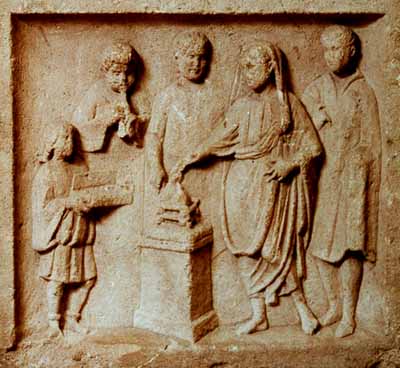
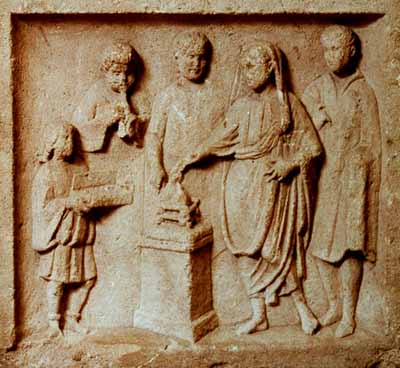
For first century A.D. Christians it was not offering a pinch of incense on the Roman altar of state in order to acknowledge that Caesar was supreme: a small act of Roman paganism that clearly violated the Bible’s first commandment:
Then God gave the people all these instructions: “I am the Lord your God, who rescued you from the land of Egypt, the place of your slavery. You must not have any other god but me” (Exodus 20:1-3 NLT).
Many thousands of Christians were hideously murdered by the barbaric Roman state for refusing to compromise with the “most noble Caesar, the civilized world’s benefactor” and just offer that little act of worship.
For post-modern Christians living in the 21st Century, there is now a tremendous pressure to conform to what may be labelled “politically correct paganism,” which like all the pagan ideologies of the past, essentially worships and exalts human ideas of right and wrong above the divine ones taught by the Hebrew and Greek scriptures.
In the latest edition of a sorry series of similar events, a biblical-values sensitive, conservative Anglican congregation was forced out of its long-held church property—St. Albans Anglican Church on King George Street—where they had been meeting since before Canadian Confederation in 1867 — by the “politically correct” Anglican Diocese of Ottawa. Their issue was same sex marriage within their church congregation.
The pastor of this forced-to-leave congregation, George Sinclair, said:
The move was “an issue of conscience, and for us, conscience trumps building … A church that just has the building, but does not have the dreams and visions that come from God, is on its way to dying … If you end up thinking you’re smarter and nicer and wiser than the master [Jesus Christ], in what way are you still his disciple? … The Bible is very clear on certain things, as to what is right or wrong.” http://www.ottawacitizen.com/life/Anglican+Church+followers+find+home/5008958/story.html#ixzz1QcGf00LT
These conservative Anglicans came to understand that when it comes to sin—compromise is indeed the language of the devil.
Sin? What is sin? Why can’t one compromise with sin?
The Apostle John gave a succinct defintion of just what sin is:
“Everyone who commits sin is guilty of lawlessness; sin is lawlessness” (1 John 3:4 NRSV).
The law that the apostle was referring to is God’s law as contained in the Hebrew and Greek bibles—not Canada’s federal and provincial law, not even the rules and policies of the Anglican Diocese of Ottawa.
God’s law divides behaviour and thought patterns into those that are permitted, generally called “righteousness” and those that are forbidden, which is “sin.”
Spiritually speaking, there are serious consequences for those who deliberately chose to live sin-full lifestyles. As the Apostle Paul wrote:
For the wages of sin is death, but the free gift of God is eternal life through Christ Jesus our Lord (Romans 6:23 NLT).
The reason no one can compromise with sin and get away with it in the long run is because…well, without God we’re just dead meat. The Bible does NOT say you have an immortal soul! The scriptures clearly teach that eternal life is only for those who belong to Christ and who are resurrected from among the dead (cf. 1 Corinthians 15:23).
The whole purpose of Jesus first coming and His sacrifice was to rescue His people from the consequences of sin. We cannot cuddle up to or give ourselves permission to do what the Scriptures say is wrong and not pay the price! Again, listen to this warning from the Apostle John:
Dear children, don’t let anyone deceive you about this: When people do what is right, it shows that they are righteous, even as Christ is righteous. 8 But when people keep on sinning, it shows that they belong to the devil, who has been sinning since the beginning. But the Son of God came to destroy the works of the devil (1 John 3:7-8 NLT).
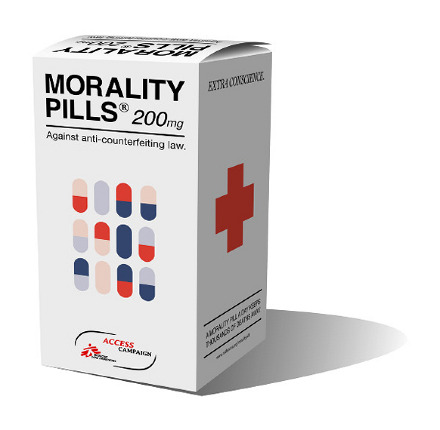
A CBC radio program called The Current, recently lent itself as a megaphone to the provocative idea that a pill is the next best thing to improve the “human animal.”— That’s the label Neil Levy, deputy director of psycho-babble at the Oxford Centre for Neuroethics, in the U.K. applies to you and me. He wants to formulate and administer a “morality pill” to targeted segments of the population.
To bolster his case, Levy cited research that shows drugs prescribed for anxiety, depression or even high blood pressure, “have been found to amplify characteristics such as empathy, self-control and increased trust; even an improvement in attitudes towards people of other races.” Neil Levy’s enthusiastic pill-pushing reminds me of the Jefferson Airplane hippie anthem “The White Rabbit” with its advocacy of the pharmaceutical lifestyle—or some of the stoner rants of Timothy O’Leary about LSD. I found Neil Levy’s advocacy of “morality pills” to be truly mind-blowing.
To the CBC’s credit they did balance Levy’s unbridled enthusiasm for mind-altering drugs with some sober second thoughts provided by Kerry Bowman of the The University of Toronto’s Joint Centre for Bioethics. Bowman commented:
“It’s a very difficult, difficult concept because if you look at what occurs when a person has moral intuition … what they do with the moral intuition and the moral feelings and the space between that and moral action — meaning the decision that is made — that’s a very deep and powerful human experience.”
Bowman thinks there could be some serious push-back if the elite tries to increase its social control over the Canadian public by pushing such “morality pills.” One of the big reasons there might be some push back is that Levy’s idea denies the spiritual and even material importance of free will to humanity. When God said, “Let Us make man in Our image, after Our likeness” (Genesis 1:26), one of the most important features of His divine nature that He gave us was our ability to choose between obedience and disobedience, right and wrong.
When the Apostle Paul thought to accept a runaway slave named Onesimus into his service, he first wrote a letter to Philemon, Onesimus’ master. Paul wanted Philemon to give Onesimus his freedom to further the preaching of the Gospel. Paul said to Philemon:
“But I didn’t want to do anything without your consent, so that your good deed might not be out of obligation, but of your own free will,” (Philemon 1:14 Holman Christian Standard Bible).
To be virtuously moral of necessity requires, first of all, that one is capable of choice—and then through the exercise of free will one chooses to do the right rather than the wrong. There is nothing noble or Godly about someone being drugged into conformity with someone else’s idea of what is politically correct.